

Why Becoming a Parent Away From Home is Different
The baby is only the beginning.
It reorganises identity, reshapes partnerships, and shifts our sense of safety. And when this reorganisation unfolds away from home, the intensity can increase in ways that are rarely named honestly enough—a different medical system, a different culture, the absence of the people who would normally just show up.
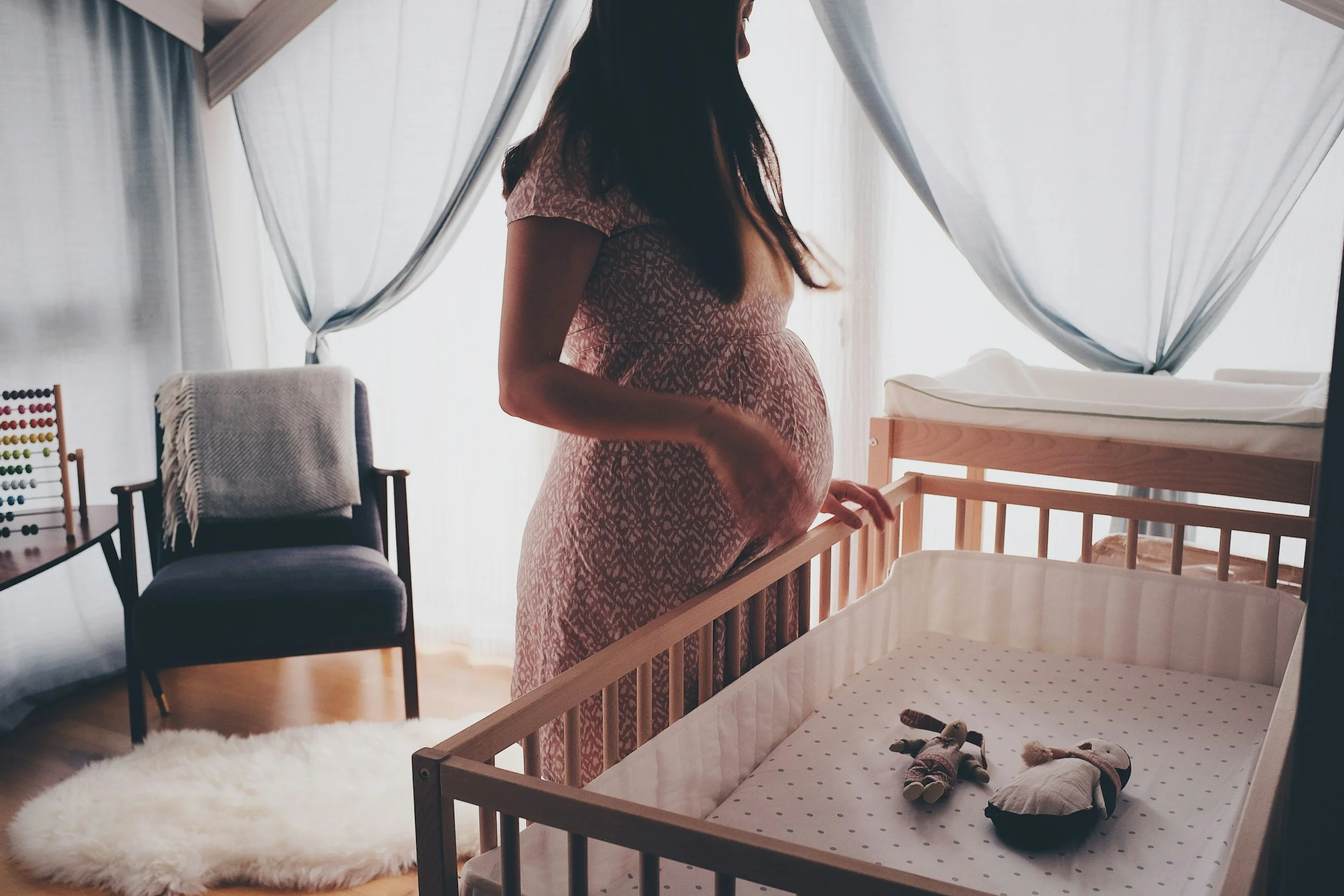
Parenthood is Already a Reorganisation
Becoming a parent is not simply a life event. It is a developmental transition—one that changes who you are at a fundamental level, reshaping your relationship with your partner, your friends, and your own parents, and opening emotional registers you may not have encountered before, including some you did not expect.
The questions that surface in those early weeks can feel disorienting in their intensity: Who am I now? What matters? What parts of myself do I even recognise? Unsettling as they are, these are not signs that something has gone wrong. They may be an integral part of the process itself.
Joy and grief tend to sit alongside each other throughout—deep love alongside a quiet mourning of former freedom, former rhythms, a previous sense of competence, sometimes all in the same hour. Physiologically, the postpartum period involves rapid and significant change: hormones shifting, sleep disrupted, your body doing what it is meant to do, but asking a great deal of you in the process. With fragmented sleep, stress tolerance drops and emotional reactivity increases. Your nervous system is primed for connection and stretched thin at the same time.
In couples, this reorganisation unfolds in two nervous systems simultaneously. The steadiness you may have previously offered each other becomes harder to access, sometimes precisely when you need it most. Even in the most supported, stable circumstances, these early months are demanding. And none of that accounts for what changes when you are also far from home.
Why Having a Baby Abroad is a Different Kind of Transition
Having had my own children abroad, and later working clinically with globally mobile families, I began to notice something that doesn't get named clearly enough: what happens when two major transitions unfold at the same time. The transition into parenthood. And the experience of living somewhere unfamiliar.
This double transition means navigating a fundamental reorganisation of identity and relationship without the relational and structural anchors that would otherwise help hold you steady—a different medical system, different cultural norms around birth and recovery, the absence of people who knew you before any of this began.
These two processes do not simply sit alongside each other. They compound.
We know how much social support matters to wellbeing. Research comparing expatriate and non-expatriate mothers consistently finds that perceived social support is one of the strongest predictors of maternal mental health adjustment—not the number of people around you, but the felt sense that someone steady is reachable.
When that is disrupted, the loss is not only logistical. It is relational.
The absence of the friend who would have come over without being asked. The rituals that did not happen because the grandmother could not travel. The postpartum visit that was never offered, or that felt rushed and unfamiliar, because you were navigating a system not built with you in mind.
Grief lives here. Often quietly, often unnamed. And unnamed grief has a way of accumulating.

This is Not About Fragility
None of this means that globally mobile families are more fragile, less capable, or doing something wrong.
The families I work with are often highly resourceful. They have navigated posting after posting, built belonging in places where they knew no one, and developed a form of adaptability that is both hard-won and deeply valuable.
But resilience has conditions. It regenerates when steadiness can be found, built, or borrowed. When continuity of relationship, of support, of knowing someone is there, is disrupted, the load increases. Not because the person carrying it is weak, but because the scaffolding they would normally lean on is not there.
The question is not whether you can handle it, but whether you should have to carry all of it alone. And whether the systems and people around you understand enough to help.
What’s Coming in This Series
This series goes further into what this transition actually involves, including what it means to give birth within a foreign medical and cultural system, and the kinds of grief that can surface with this experience. It looks closely at postpartum mood and anxiety: how it presents, why it's often missed, and how global mobility can intensify your risk.
We'll explore the protective factors that support adjustment and what it means to find them when familiar sources of support aren't available. We'll stay with the identity questions this period brings up—often most significantly, what it means to feel like yourself, and enough, when so much is unfamiliar.
And finally, we'll give the relationship between partners its own honest account. The disconnection that can emerge from coping with this transformation, painful emotions and old unmet needs surfacing, is often amplified further by the isolation and shallow social support that globally mobile couples experience.
If we can name the emotional and relational challenges of this transition, and the ways that dislocation compounds them, we can also begin to address them.
